

Reaching a weight-loss goal with a GLP-1 medication is a big accomplishment, but the scale tells only part of the story. As the weight comes off, loose skin that stretched to cover it often stays behind, visible across the abdomen, arms, thighs, and neck. Dieting and exercise cannot tighten it, because the problem is skin that has lost its elasticity, not fat left to lose.
That is where surgical body contouring comes in. At Edina Plastic Surgery, our board-certified plastic surgeons have refined patients’ results after major weight loss since 1977, and the procedures long used after bariatric surgery apply just as well after GLP-1 weight loss.
Why Weight Loss From GLP-1 Medications Leaves Loose Skin
Skin stretches to cover weight gain and does not always shrink back. When you lose fat quickly, the volume that filled out your skin disappears faster than the skin can adapt. Collagen and elastin, the fibers that give skin its snap, also weaken with age and sun exposure, so loose skin is more stubborn for some people than others.
The American Society of Plastic Surgeons reports that its member surgeons are seeing a growing number of consultations tied to GLP-1 use from patients wanting to address excess skin after weight loss. Surgery is the only way to remove that skin. Creams, energy devices, and workouts can improve skin quality to some extent and tone the underlying muscle, but they cannot remove tissue that no longer fits the area.
Surgery Options for Loose Skin After GLP-1 Weight Loss
The right procedure depends on where you carry loose skin and how far it extends.
Area of Concern |
Procedure |
What It Addresses |
| Abdomen | Tummy tuck | Hanging lower-abdominal skin and lax muscle |
| Whole midsection | Body lift | Skin laxity that circles the torso |
| Upper arms | Arm lift | Loose skin from the underarm to the elbow |
| Thighs | Thigh lift | Sagging inner or outer thigh skin |
| Breasts or chest | Breast lift, breast reduction, or male breast reduction | Deflated or sagging breasts and chest |
| Face and neck | Facelift, neck lift | Jowling and neck laxity |
Where Liposuction Fits In
Liposuction removes fat, not skin, so it is rarely the answer as a standalone procedure after major weight loss. If your concern is loose, hanging skin, liposuction will make the laxity look more pronounced. After weight loss, this procedure works best when paired with a lift or a tuck, eliminating stubborn pockets of fat and sculpting the body alongside skin removal techniques.


Abdomen and Midsection
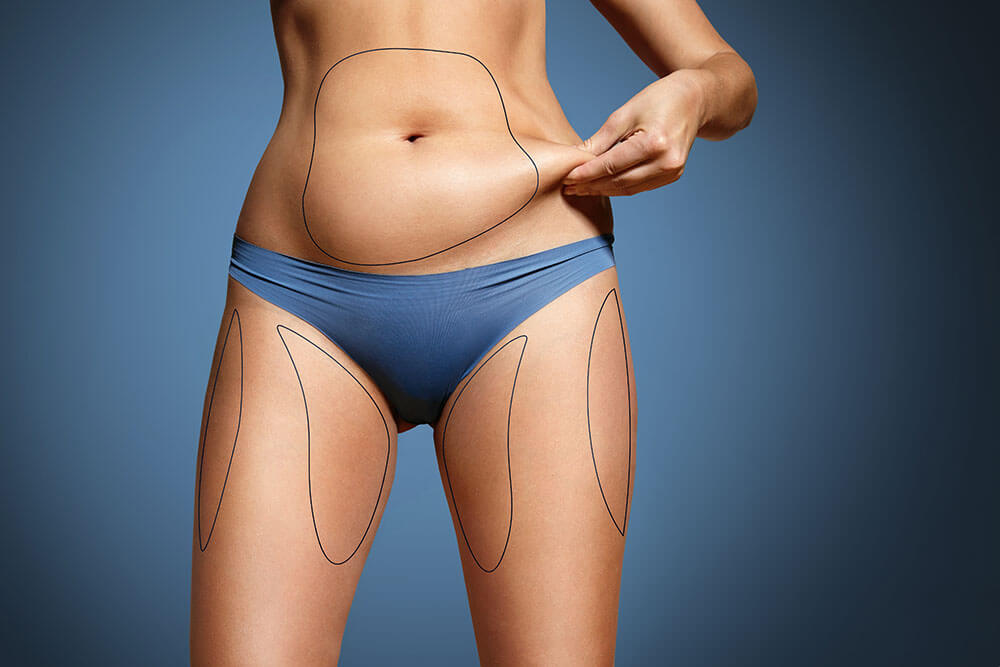
The abdomen is one of the areas patients ask about most. A tummy tuck removes excess skin across the lower abdomen and repairs stretched abdominal muscles, which restores a firm, flat contour. When loose skin encircles the entire torso and extends to the hips, buttocks, and outer thighs, a body lift treats the full circumference in a single surgery. Our surgeons plan incisions to sit within the lines of underwear or swimwear whenever the anatomy allows.
Arms and Thighs
Loose skin behind the upper arms is common after major weight loss, and diet cannot target it. An arm lift removes excess tissue through an incision along the inner arm, tightening the contour from underarm to elbow. A thigh lift does the same for the thighs, where sagging skin can chafe and make clothing fit poorly.
Breasts and Chest
Weight loss tends to deflate the breasts, leaving them flatter and lower. A breast lift removes excess skin from the base of the breast that causes it to hang on the upper abdominal wall and reshapes the breast. A lift can be paired with an implant to restore volume or with a breast reduction when heaviness is the concern. For men left with loose skin and firm tissue across the chest, male breast reduction restores a flatter, tighter pectoral contour.
Am I a Good Candidate for Body Contouring After GLP-1 Weight Loss?
The strongest candidates have reached a healthy, stable weight and maintained it for several months. Operating before your weight settles can undercut the result, since further loss or regain changes the contour a surgeon has just refined. Good general health is imperative as well because these are real surgeries with real recovery involved.
GLP-1 medications add a consideration. Rapid weight loss can affect nutrition and muscle mass, which shape how well you heal, so our surgeons review your history and coordinate with your prescribing provider when needed. At your consultation, you and your surgeon decide which areas to treat, whether to combine them, and a timeline that protects your results.
Why Choose Edina Plastic Surgery
Edina Plastic Surgery has cared for Twin Cities patients since 1977. Every procedure is performed by an experienced plastic surgeon certified by the American Board of Plastic Surgery, and our surgeons have earned repeated recognition on Mpls.St.Paul Magazine’s Top Doctors list.
Surgery takes place in our on-site surgical center, accredited by Quad A (AAAASF) to meet the same standards as a hospital operating room, with two operating rooms and a minor procedure room. It sits directly across from M Health Fairview Southdale Hospital, offering an added layer of safety for more involved procedures. That mix of accreditation, experience, and planning makes staged or combined face and body contouring surgery a safe option.
Frequently Asked Questions About Body Contouring After GLP-1 Weight Loss
When Can I Have Surgery After GLP-1 Weight Loss?
Most surgeons recommend waiting until you’ve reached your goal weight and maintained it for at least three to six months. A stable weight lets your skin settle and gives your surgeon an accurate picture of what needs correcting for a more predictable result.
Do I Need to Stop My GLP-1 Medication Before Surgery?
That decision belongs to your plastic surgeon and your prescribing provider together. GLP-1 medications can slow how quickly the stomach empties, which affects anesthesia safety, so our team provides specific guidance during pre-operative planning rather than a single blanket rule for everyone.
Can More Than One Area Be Treated in the Same Surgery?
Yes, many patients target more than one area in a single surgery. Combining procedures can shorten your total recovery time and cost. However, longer operations carry more risk, so surgeons often stage treatment into upper-body and lower-body sessions a few months apart. Your plastic surgeon will work with you to create a plan that’s safe and effective for your needs.
Is Body Contouring Covered by Insurance?
Body contouring after weight loss is usually considered cosmetic and paid out of pocket, though certain procedures may qualify for coverage in specific medical situations. Our team can review your options and financing plans, if desired, during your consultation.
Refine Your Results With the Twin Cities’ Trusted Plastic Surgeons
You put in the work to lose the weight. Body contouring at Edina Plastic Surgery helps your body match that effort, guided by board-certified plastic surgeons who have shaped this practice for nearly 50 years. Call or text 952-925-1765, or book your consultation online, to talk through your options. We proudly serve Edina, Minneapolis, St. Paul, Minnetonka, and the surrounding Twin Cities communities.