What to Expect
- Anesthesia: General
- Length of surgery: 1.5 – 2.5 hours
- Outpatient/inpatient: Outpatient
- Adjunct procedures:Mommy Makeover, Liposuction, Breast Lift
- Recovery: 1 – 2 weeks
- Requirements: Body Mass Index (BMI) of 25 or above
Today, more than any time in history, women have more options for enhancing the fullness and shape of their breasts.
For much of the history of aesthetic medicine, breast augmentation has been performed through the use of implants. While huge strides in implant technology have been made over the years, they still do not perfectly imitate the look and feel of natural breasts. This is why breast augmentation with fat grafting has become so popular in recent years. Rather than using an artificial device that tries to mimic the real thing, breast fat grafting uses only natural tissue to add shape and volume to the breasts.
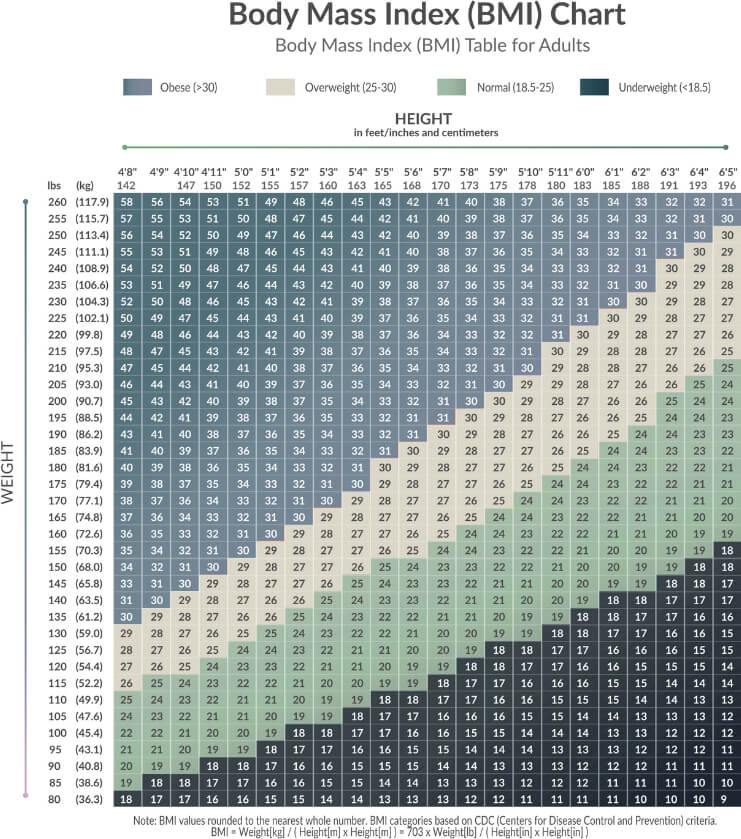
If you are interested in learning more about how you can achieve a natural look with breast fat grafting in Edina, Minnesota, the first step is ensuring you are a good candidate for the procedure. A Body Mass Index (BMI) of 25 or above is required for your surgeon to harvest the appropriate amount of fat to achieve optimal outcomes. Calculate your BMI in the chart below to confirm you fall into this category before scheduling a consultation. Then, give our office a call at (952) 592-5871 or book online. Our board-certified plastic surgeons are excited to help you reach your goals.
Calculate Your Own Body Mass Index
Your Weight
Your Height
Normal
18.5-25
Underweight
Less than 18.5
Overweight
25-30
Obese
More than 30
Personalizing Your Breast Fat Grafting Lift Procedure
Your surgeon will structure your new breast volume based on the breast size and shape you would like to achieve. While there is plenty of room for personalization here, another way you can tailor your surgery to your specific needs is to combine it with another procedure. Here are a few procedures that are often grouped together:


Liposuction
Fat grafting requires that a certain amount of liposuction be performed, but it does not have to stop when the amount needed for the transfer to the breasts is achieved. You can opt for a more extensive liposuction procedure to bolster the improvement to your contours, and it can be done in more than one area.
Breast Lift
Many women come to Edina Plastic Surgery assuming that they need breast augmentation because their breasts appear to be deflated. In some cases, this issue is better addressed with a breast lift than a breast augmentation. If you want to improve breast tissue laxity and would also like to increase the fullness of your bust, then combining these procedures is an effective strategy.
Mommy Makeover
A breast lift, liposuction and breast augmentation are three common, core components of a mommy makeover, a procedure designed to reverse the effects of pregnancy, childbirth and breastfeeding. Add a tummy tuck into the mix, and you are on your way to a head-to-toe aesthetic makeover.
Deciding If Breast Fat Grafting Is Right for You
If you believe your bust would benefit from a subtle, natural boost in size, then a breast augmentation with fat grafting may be a great option. It’s important to remember that fat transfer does have limitations. First, a patient must have a Body Mass Index (BMI) of at least 25 to ensure enough fat can be harvested to achieve fullness in the breasts.
Next, only a volume increase of ½ cup to 1 cup size can be achieved with fat grafting. If you are looking for a wildly dramatic shift in bust size, a traditional breast augmentation may be more effective for your goals. Fat grafting to the breasts also produces a more natural breast shape that is more tear drop shaped. It does not give the upper pole fullness to the breast that an implant gives.
Some patients choose to combine fat grafting with implants. When these techniques are paired, the transferred fat softens the implant edges and creates an even more natural appearance.
Ideal candidates for breast fat grafting include women who:
- Are interested in an alternative to implant-based augmentation
- Are seeking modest volume enhancement
- Are desiring a more naturally shaped breast
- Have sufficient fat stores in other parts of the body to transfer with a Body Mass Index (BMI) of 25 or above
All candidates for breast fat grafting should be in good physical and mental health before undergoing surgery and have realistic expectations of what can be achieved through this technique. If you have preexisting conditions like high blood pressure, diabetes or obesity, you may be at a higher risk of developing surgical complications. Nicotine usage also increases the risk of complications significantly.

Breast Fat Grafting vs. Implants: How Do They Compare?
Many women wonder whether fat grafting or implants will better serve their goals. Each approach has advantages and limitations. The key differences include:
| Factor | Breast Fat Grafting | Breast Implants |
| Size increase | ½ to 1 cup size | Multiple cup sizes possible |
| Look and feel | Completely natural (your own tissue) | Natural with modern implant technology |
| Longevity | Permanent once fat cells establish | Not lifetime devices; may need replacement |
| Body contouring benefit | Yes (liposuction at donor sites) | No |
| Scarring | Minimal (small liposuction incisions) | Incision at breast; technique varies |
| Maintenance | None required | Periodic monitoring recommended |
| Upper pole fullness | More subtle, teardrop shape | Greater upper breast fullness |
| Candidate requirements | BMI of 25+ with adequate donor fat | Most healthy adults |
Preparing for Your Breast Fat Grafting

Every patient at Edina Plastic Surgery receives a thorough initial consultation with their surgeon. During this meeting, bring up any questions, comments or concerns you have so they can be answered early on in the process. It’s also helpful to come to your consultation with a clear idea of the aesthetic you would like to achieve, so your surgeon can set appropriate goals.
If your surgeon believes it could be beneficial, they may suggest combining procedures to help attain your desired results. Breast fat grafting pairs well with extended liposuction or a breast lift, or the group of procedures involved in a complete mommy makeover.
It is also used in conjunction with implant-based augmentation to provide additional shape and make the implants look and feel more natural.
Your surgeon will consider your goals, concerns, medical history and anatomy, and then come up with a detailed surgical plan. This plan will include a list of instructions for you to follow during the weeks leading up to your procedure. You may be asked to refrain from tobacco use and taking certain medications and vitamins. Following these instructions gives you the best chance of a safe surgery.
The Breast Fat Grafting Procedure
Breast augmentation with fat transfer takes place in our on-site Quad A-accredited surgical facility under general anesthesia and typically lasts 1.5 to 2.5 hours.
Step 1: Fat Harvesting
Your surgeon begins by performing liposuction to collect fat from the predetermined donor sites. Incisions are typically just a few millimeters long. This is sufficient to allow the insertion of a thin cannula that loosens and removes fat cells. Your surgeon is careful to preserve the integrity of the harvested cells, which is critical for successful grafting.
Step 2: Fat Processing
Once the fat is collected, it undergoes processing to separate healthy fat cells from blood and other fluids. This purification step helps with maximizing fat cell survival after the transfer. The refined fat is then loaded into specialized syringes for injection into the breasts.
Step 3: Fat Injection
Your surgeon injects the purified fat into multiple layers of breast tissue. Fat is placed in tiny amounts throughout the breast, creating a natural distribution that promotes blood supply to the transferred cells. The layering technique helps maximize the percentage of fat that survives long-term.
Step 4: Final Shaping
After the fat is placed, your surgeon evaluates the overall shape and symmetry of your breasts, making any final adjustments. The small incisions are closed, and you’re moved to our recovery area where our team monitors you before you’re released to go home.
What to Expect During Breast Fat Grafting Recovery
Breast fat grafting is less invasive than some surgical procedures. However, your body still needs time to heal at the donor and treatment sites. The typical fat transfer breast augmentation recovery timeline is as follows:
Days 1 to 3
Expect moderate soreness, swelling and bruising at the liposuction donor sites and in your breasts. This discomfort can be addressed with over-the-counter or prescription medication recommended by your surgeon. Rest is essential, though light walking is encouraged to promote circulation.
Days 4 to 7
Swelling and bruising begin to decrease. Most patients feel well enough to handle light daily activities, though strenuous exercise and heavy lifting should still be avoided. You may be able to return to a desk job toward the end of the first week if you feel comfortable.
Weeks 2 to 3
Bruising continues to fade. Swelling reduces significantly. Many patients return to work and most regular activities during this period. Your surgeon will advise when you can resume exercise and more physical tasks, typically after reaching the three-week mark.
Weeks 4 to 6
Residual swelling continues to resolve. You can gradually return to all normal activities, including vigorous exercise. Your breasts will start to feel more natural as the transferred fat settles into place.
Months 3 to 6
By this point, the fat cells that survived the transfer have established blood supply. They are permanent. Your final breast size and shape will be visible, and any remaining swelling will have resolved.
Breast Fat Grafting Results
Your final results should be apparent by 6 months. Sixty percent of the fat transferred to your breasts will remain, some fat cells will not survive the transfer process. Those that do can remain indefinitely.
Like fat anywhere else in your body, the fat used for your augmentation may be susceptible to fluctuation based on weight change. The fat used in fat grafting also “remembers” where it is from. For example, if you usually gain weight first in your abdomen and fat is used from your abdomen and transferred to your breasts, you will gain weight first in your abdomen and, now, your breasts.
Maintaining a stable weight will give you the most consistent results. One of the upsides to augmentation without implants is that there is no chance of capsular contracture, rippling or implant rupture. Your breasts are made entirely of your own organic material.
Fat grafting breast augmentation achieves a fuller, more robust upper torso aesthetic without creating an overdone or unnatural appearance. The results are generally long-lasting, and many women who choose fat grafting over implants love the completely natural feeling that fat transfer provides.
Why Choose Edina Plastic Surgery for Breast Fat Grafting
Our patients benefit from a combination of surgical expertise, advanced technology and facilities, and compassionate care that has made us a trusted choice for breast surgery in Minnesota for decades.
Board-Certified Plastic Surgeons
Our surgeons are certified by the American Board of Plastic Surgery and bring decades of combined experience to every procedure. They have been consistently recognized as “Top Doctors” by Minneapolis St. Paul Magazine and received the “Best Doctors for Women” designation from Minnesota Monthly Magazine.
Quad A-Accredited Surgical Facility
Your breast fat grafting procedure takes place in our on-site surgical facility, which holds accreditation from Quad A (American Association for Accreditation of Ambulatory Surgery Facilities). This accreditation means our facility meets the same rigorous safety standards as hospital operating rooms, with strict protocols for equipment, staffing and emergency preparedness.
Advanced 3D Imaging Technology
We use Vectra XT 3D imaging to help you visualize your potential results before your surgery. This technology captures detailed images of your body and allows you and your surgeon to discuss your procedure with more clarity.
Comprehensive Care Under One Roof
From your initial consultation through post-operative follow-up, your entire journey takes place at our Edina location. For patients interested in complementary skin treatments, our on-site medical spa, Skin Artisans, offers services that can enhance and maintain your surgical results.
Request a Consultation Today
Breast fat grafting is a safe, proven way to increase the size of your bust without introducing foreign objects into your body. If you are ready to get started with your fat grafting procedure, or if you need help deciding which breast enhancement procedure is right for you, give Edina Plastic Surgery a call today at 952-925-1765 or fill out our online contact form. Our surgeons look forward to providing you with the beautiful, natural results you deserve!
Frequently Asked Questions About Breast Fat Grafting
How much larger can breast fat grafting make my breasts?
Breast fat grafting typically increases breast size by ½ to 1 cup. The exact amount depends on how much donor fat is available and how much survives the transfer. If you’re seeking a larger increase, you may need to consider implants or a combination approach.
What areas can fat be taken from for breast fat grafting?
Common areas include the abdomen, flanks (love handles), thighs and back. Any area where liposuction can be performed is a potential donor site.
How long does breast fat grafting last?
The fat cells that survive the transfer and establish blood supply are permanent. Approximately 60% of transferred fat remains long-term. Your surgeon accounts for this during the procedure by adding slightly more fat than needed.
Significant weight fluctuations can affect your results, as the transferred fat cells behave like fat elsewhere in your body. They will expand if you gain weight and shrink if you lose weight.
Does breast fat grafting leave visible scars?
Scarring is minimal. The liposuction incisions used for fat harvesting are only a few millimeters long and typically fade to nearly invisible over time. There are no large incisions on the breasts, as fat is injected through tiny entry points.
What BMI is required for breast fat grafting?
A Body Mass Index of 25 or above is required to provide sufficient fat for harvesting and transfer. You may not have adequate donor fat to achieve meaningful breast enhancement if you have a lower BMI. Your surgeon will evaluate your candidacy during your consultation.
Is breast fat grafting safer than breast implants?
Each procedure has its own risk profile. Breast fat grafting eliminates implant-specific concerns like capsular contracture, rupture and the need for future replacement surgery.
However, fat grafting carries its own considerations, including the possibility of fat necrosis (hardened areas where some fat cells didn’t survive) and potential calcifications that may appear on mammograms. The American Society of Plastic Surgeons has determined that fat grafting to the breast does not increase the risk of breast cancer or significantly interfere with cancer detection.
Will breast fat grafting affect my mammograms?
Fat grafting can sometimes cause calcifications that appear on mammograms, though experienced radiologists can typically distinguish these from suspicious findings. Inform your mammography technician that you’ve had breast fat grafting so they can note it in your records. There is no evidence that fat grafting increases breast cancer risk or makes cancer harder to detect.
How many fat grafting sessions will I need?
Most patients achieve their desired results with a single procedure. However, some women opt for a second session if they want additional volume or if their body absorbed more fat than expected. If you’re interested in a second procedure, it is typically not scheduled until at least six months after the initial surgery.
Can I get breast fat grafting if I’ve had implants removed?
Yes. Breast fat grafting is a popular option for women who have had implants removed and want to restore some volume naturally. Fat transfer can help fill areas that look deflated after explant surgery.
How much does breast fat grafting cost?
The cost of breast fat grafting varies based on the complexity of your procedure and whether it’s combined with other surgeries. During your consultation, our team will provide a detailed quote based on your customized surgical plan. We offer financing through Cherry, CareCredit and PatientFi to help.